
My pick is Kai’s push ball, the worn red Jolly Pets Push-n-Play, the 14 inch size. Push and chase means a herding ball, outside. The best toys for Australian Shepherd indoor play, in my house anyway, are soft ones. These three soft toys stay in Kai’s rotation. If the toy pile gets boring, he invents his own job.
The soft toys come first, then Kai’s durable toys and the Australian Shepherd puppy toys. The outdoor push-and-chase toys are in the herding ball guide. The HERO football has its own page. The other two are a blue dino and a blue crinkle duck.
As an Amazon Associate and Chewy affiliate, we earn from qualifying purchases. The price you pay doesn’t change.
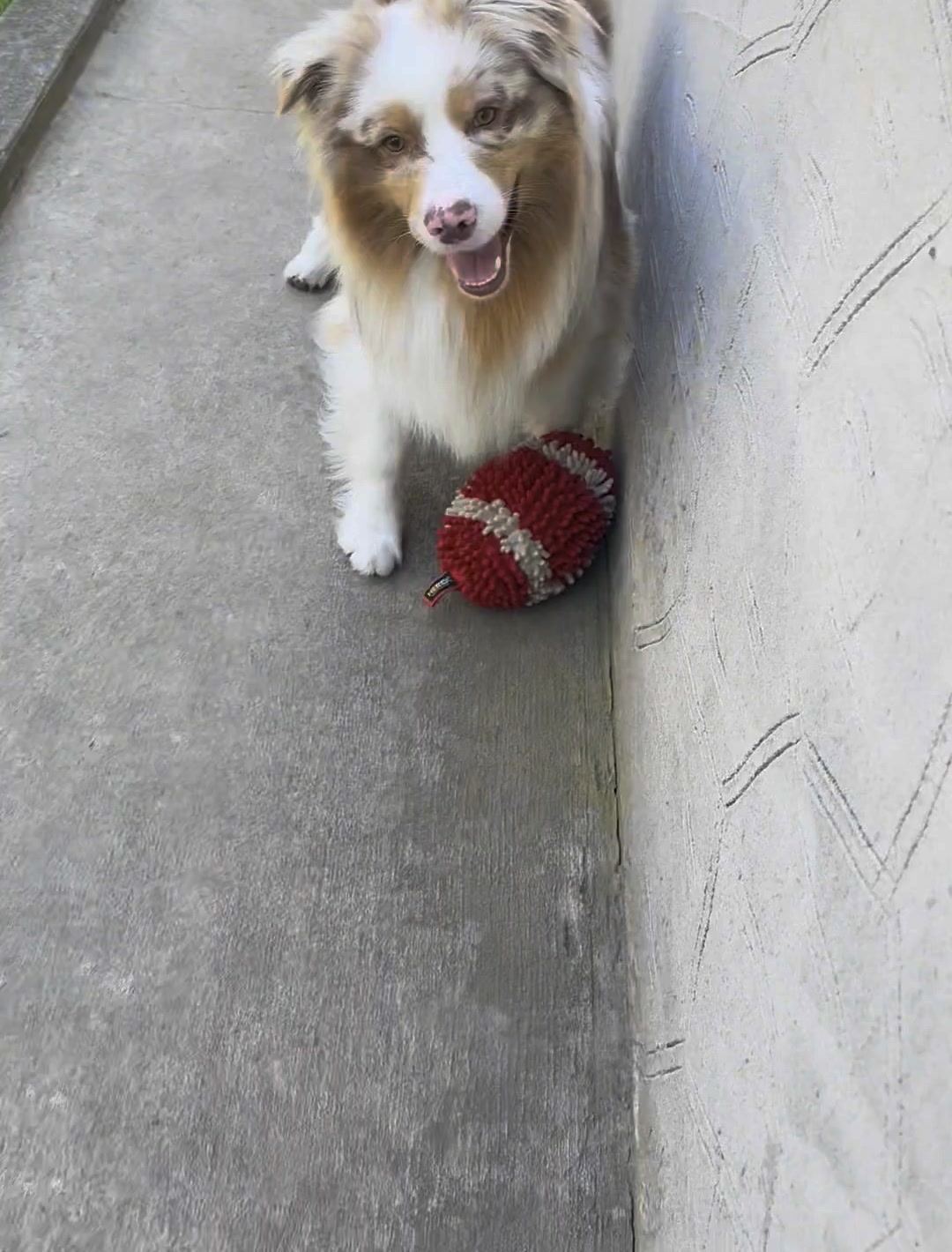
Pick this if your dog likes to claim a toy and run off with it.
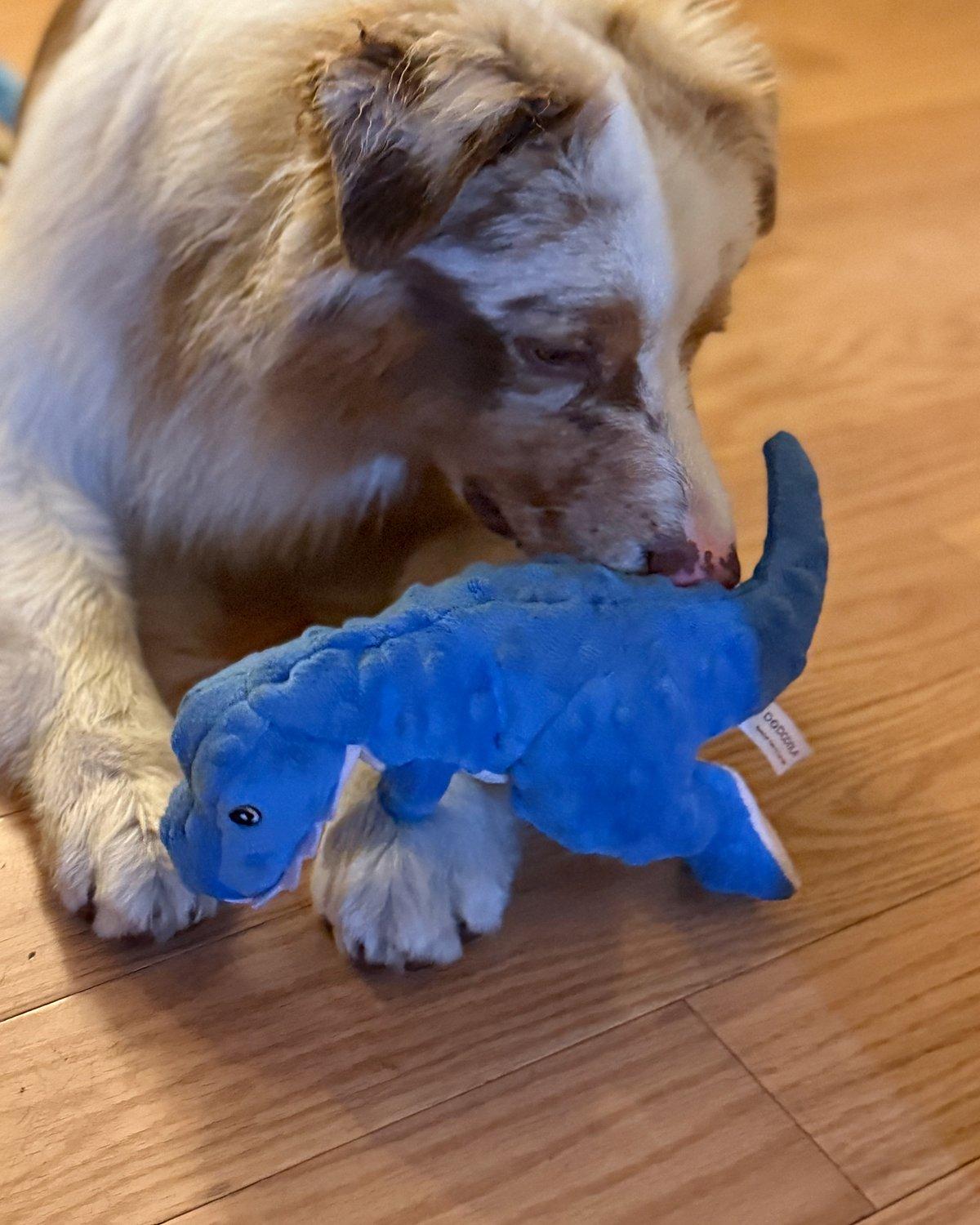
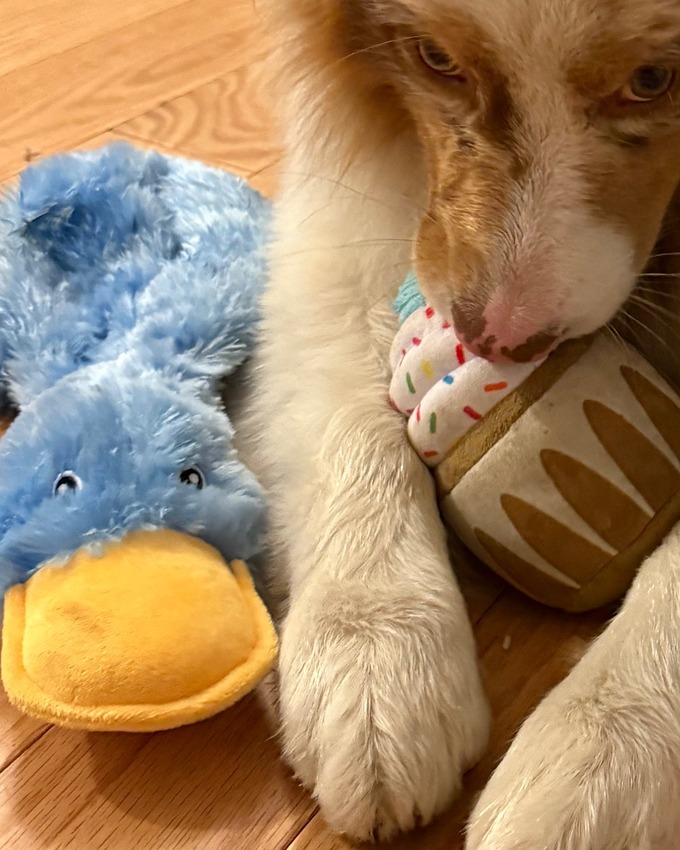
Pick this if you don’t want a stuffing blizzard when a seam opens.
Kai’s three soft toys compared
All three are soft and all three are supervised toys. The differences are what the toy does and what to watch for.
| Toy | What it does | Watch out |
|---|---|---|
| HERO (Caitec) shaggy football | Red and cream shaggy football he sits with and claims. Soft indoor play. Full write-up on its own page. | Soft toy, so stay close while he plays. |
| Blue dino plush | Squeaky shake toy. | Supervise it so it doesn’t turn into a shred project. |
| Blue crinkle duck | Crinkle toy. Blue, not a mallard. | If a seam opens you don’t get a stuffing blizzard, but put it away. |
Kai’s durable toys
If you only buy one, buy for the game your dog plays most. A dog who pushes and herds is the Jolly’s audience. A dog who wants to grab and drag is the QDAN’s. A dog who wants something to work at with food inside is the KONG’s.
Jolly Push-n-Play 14 inch
Kai’s push ball is the worn red Jolly Pets Push-n-Play, the 14 inch size, which is the biggest one Jolly makes. It’s scuffed and still round.
Jolly says it’s not meant to be a chew toy and that excessive use may cause tooth wear. Treat it as a push ball, not a chew.
Size does a lot of the work here. A 14 inch ball is hard for a dog to get a mouth around, and a ball a dog can’t bite into is hard to take apart. I have a whole page on it, the Jolly ball for Australian Shepherds, if you want sizing and the other Jolly balls.
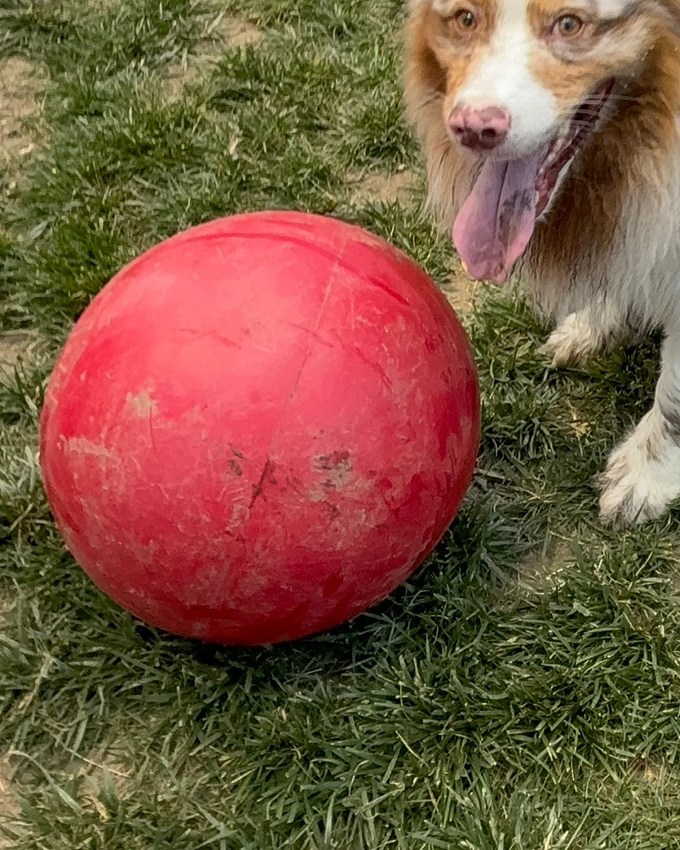
If you want pure pushing, the Jolly is the better fit.
QDAN herding soccer ball
Kai loves this ball and has so much fun with it. Nose and chest first, then he grabs a green tab and yanks. The green tabs are the handle, and they’re what turn it from a plain ball into a game.
The straps let a dog carry the ball and keep the game going without someone throwing every few seconds, which suits a herding breed with a lot of drive. Kai’s is the standard Large.
The straps are also the part most likely to give. Play with it in open space and stay with your dog. Don’t leave it out as a chew, and retire it if a strap rips or the shell cracks. There’s more in my QDAN herding ball review, and the herding ball guide compares it with other options.
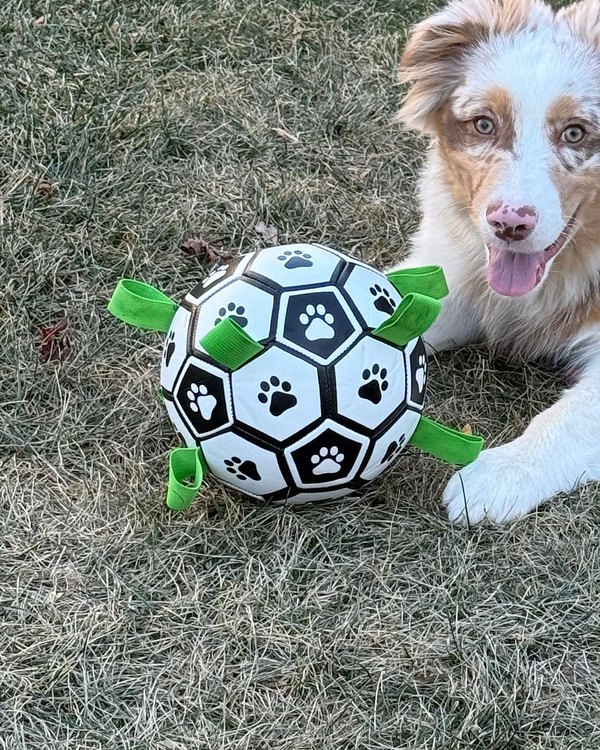
Pick this if your dog wants to grab and drag.
KONG Classic
The KONG Classic is Kai-tested, and his is the Medium. It’s the hollow, snowman shaped rubber toy most dog owners know, and the hollow middle is what makes it a stuffing toy.
KONG says the red Classic is natural rubber made for average chewers and that it’s ideal for stuffing and freezing. For the most powerful chewers, KONG points you to the black Extreme instead. If your dog takes rubber toys apart, that’s the one to look at.
One honest note on size. Kai’s is the Medium. KONG sizes by weight and lists the Large for dogs from 30 to 65 lb, and it says the largest ring should be bigger than the back of your dog’s mouth. If your dog is between sizes or you’re not sure, KONG says to size up. My full write-up is the KONG Classic for Australian Shepherds.
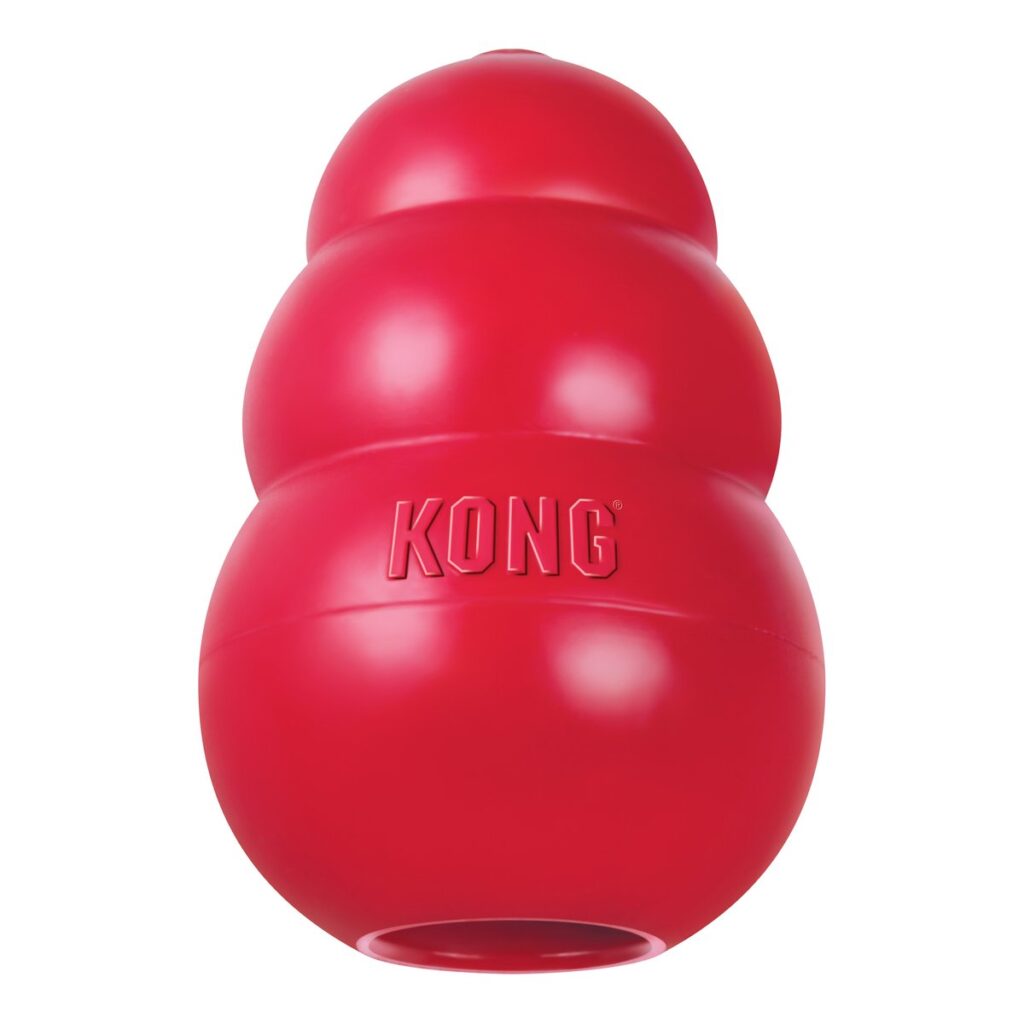
Pick this if your dog wants something to work at with food inside.
Side by side comparison
| Toy | Material | Kai’s size | Built for | Not for |
|---|---|---|---|---|
| Jolly Push-n-Play | Hard plastic | 14 inch | Pushing and herding games | Chewing |
| QDAN herding soccer ball | Ball with grab straps | Standard Large | Grab, drag and herding games with you there | Being left out as a chew |
| KONG Classic | Red natural rubber | Medium | Stuffing and freezing, average chewers | Power chewers, per KONG |
What durable means for an Aussie
Durable doesn’t mean indestructible. Every maker on this page says some version of that. Jolly says no toy is indestructible, and KONG says the same about its own rubber. What durable really means is that the toy fits how your dog plays and holds up when it’s used the way it was built for.
Aussies are herders, and a lot of their play is moving things: pushing, chasing, grabbing and dragging. That’s rough on toys, but it’s a different kind of rough from a dog who lies down and chews for an hour. A push ball can handle a lot of herding and still crack under a determined chewer. A rubber chew can take hours of gnawing and be a poor fit for a herding game. Match the toy to the job.
Soft toys are their own category. They’re great for carrying and comfort, but they aren’t built for the same pulling and shoving as a herding ball, so they don’t belong on a list of tough toys.
KONG’s guidance for its rubber toys is simple: check them often and replace them once you see cracks or missing pieces. That rule works for every toy on this page, plastic and straps included. A toy doesn’t have to be in pieces to be finished.
The AKC’s advice on toy durability lines up with this. Supervise play, and throw toys away once they have rips, tears or deep punctures. A toy that’s coming apart is how dogs end up swallowing pieces.
Picking the right size for a 48 lb dog
Size is the first safety check and the easiest one to get wrong. A toy that’s too small can be swallowed or get stuck.
- Balls. PDSA says to pick a ball big enough that your dog can’t swallow it or get it lodged in the throat, and warns that very hard balls can break teeth in dogs that chew hard.
- Push balls. Kai is 48 lb and has the 14 inch Push-n-Play. A bigger ball is harder to get a mouth around, which keeps it a push toy.
- KONG. Go by KONG’s size guide and the back of your dog’s mouth, and size up if you’re unsure.
- Everything else. The AKC’s guide to picking toys says to match toys to your dog’s size and play style.
Jolly’s own size guide lists the 10 inch Push-n-Play for large dogs of 60 to 110 pounds. Kai sits below that at 48 lb and has the 14 inch. For a push ball, bigger works in your favor, because the whole idea is a ball your dog can’t bite into. For a chew toy like the KONG, follow the maker’s size guide and check it against your dog’s mouth.
If you have more than one dog, buy for the biggest mouth in the house. KONG gives that advice for its own toys, and it makes sense for balls too.
Which toy guide you actually need
If your Aussie chews through everything, jump to Kai’s durable toys. If the problem is a dog with nothing to push or chase, you want the herding ball guide.
What to look for in a soft toy for an Australian Shepherd
Herding drive: soft toys are for calm play, not the chase
Aussies are a herding breed. They like a job, and if you don’t give them one they’ll find one. If the toy pile gets boring, Kai invents his own job. A soft toy covers the indoor side of that, a shake or a short tug. It doesn’t cover the push-and-chase side. For Kai that part happens outside with a herding ball. Don’t expect a plush duck to burn off a herding dog’s energy. Expect it to fill a quiet stretch on the living room floor.
Size: too big to swallow, for a mini or a standard
Pick a toy your dog can’t fit fully in their mouth. A standard Aussie runs roughly 40 to 65 pounds, so most medium and large plush toys work. A Miniature American Shepherd, the mini Aussie, is about 20 to 40 pounds and does better with a smaller toy to carry and shake, but still nothing that disappears behind the teeth. Sizes vary a lot between listings. Check the dimensions on the product page, and go up a size if you’re between two.
Shed hair and washing
Aussies have a double coat that blows about twice a year, and a plush toy collects that hair like a lint roller. Wash it if the label says it’s machine washable, and check the tag for the settings. Air dry. Heat is hard on seams and squeakers.
How to rotate tough toys so they last
Rotation is the cheapest way to make good toys last longer. Keep two or three out and put the rest away. Toys that sit on the floor all day get boring, and swapping them keeps the old ones interesting while spreading the wear.
A toy that’s been gone a week comes back new. You’ll catch damage this way too, since you’re handling each toy on the way in and out.
- Keep game toys for games. Herding balls like the Jolly and the QDAN are best brought out for play with you and put away after.
- Give the KONG its own slot. A stuffed, frozen KONG is a different kind of toy from a ball, so it rotates on its own schedule.
- Fetch is its own thing. A fetch toy like the Chuckit Flying Squirrel is built for throwing, not for holding, so it isn’t on this list of tough toys.
- Check before you hand it over. A quick look at straps, seams and the surface takes ten seconds. Cracks, splits and loose pieces mean it’s done.
Rotation doesn’t make a weak toy strong. It just keeps a good toy from being worn out by a dog with nothing else to do.
How to choose and use a soft toy
- Decide what the toy is for. Shake and carry means a plush with a squeaker or a crinkle. Push and chase means a herding ball, outside.
- Check the size against your dog’s mouth. Too big to swallow, every time.
- Check the seams and the squeaker pocket before the first session.
- Keep toy time short and stay in the room. A short session beats an hour of unsupervised shredding.
- Shaking is fine. Chewing means the toy goes back in the closet.
- Inspect after each session. Bin anything with exposed stuffing or a loose squeaker.
- Rotate. Two or three toys out, the rest put away, swapped every few days.
Best Australian Shepherd puppy toys
Toy advice for Aussie puppies should assume destruction capacity. Soft plush without rules becomes confetti. Buy for jobs: chew, tug, chase, stuff, sniff.
Kai’s keepers earn rotation. Failures leave, like rope toys that frayed into string snacks. No sentimental shelf for shredded plastic.
Categories that work
Stuffable. Kong Classic after walks for settle. Start easy so he wins.
Tug. With an out or trade cue.
Flirt-pole. Short chase bursts, then break. Joints are young, keep sessions sane.
Hard chews appropriate for age. Size up so chunks are not swallowable. Supervise.
Nose work. Snuffle and find-it with soft bites from Kai’s go-to treats.
Rotation and safety
Two or three out at a time. Thirty toys on the floor taught him to shred the weakest one. Inspect for sharp edges. Retire anything that becomes a choke risk. Resource guarding? Train trades; do not free-for-all.
Chewing and teething: a plush is not a chew toy
Soft toys squeak or crinkle, and they rip. That’s the appeal and the risk. A loose squeaker or a mouthful of stuffing can get swallowed. When the shaking turns into chewing, take the toy away. A teething puppy needs something made for chewing, not a plush. I put what to give a teething puppy instead on its own page. Check soft toys after every session. A loose seam gets sewn or binned, not another round. The crinkle duck helps there. If a seam opens, you don’t get a stuffing blizzard.
Are squeaky toys safe for Australian Shepherd puppies?
Only with you in the room. A squeaker is small enough to swallow once it works loose, and a teething puppy is working hard to get it loose. Pick a toy too big to fit fully in the mouth and check the seams after every session. Stop the game when play turns into chewing. A puppy that needs to chew needs a chew toy, not a plush.
How to pick keepers
Can I supervise it? Can I wash or wipe it? Does it survive more than a few sessions without becoming a swallow risk? If no, it does not stay in rotation, no matter how cute the listing photo.
Keep toy time short and supervised
Keep toy time short and stay in the room. When a toy turns into a chewing project, put it away. Outdoor push and chase is its own thing, covered in the herding ball guide. If you’re starting from scratch, the Owner’s Kit has the basics.
Soft toys are for when you’re on the couch and the dog needs something to do. They’re not what you leave in the crate. For crate time, Kai gets a stuffed KONG Classic. The plush stays out of the crate.
Frequently asked questions
What toys do Australian Shepherds like?
They like a job. Kai gets his outside, pushing a ball around. Indoors, the soft toys he can shake and carry stay in his rotation: a red and cream shaggy football, a squeaky dino and a crinkle duck. Keep a few toys in reserve and swap them so the pile doesn’t go stale.
Are stuffed or plush toys OK for Australian Shepherds?
Yes, as supervised play toys. They’re not chew toys. Stay in the room, and when the shaking turns into chewing, put the toy away. Squeakers and stuffing are swallow risks, so bin any toy with an open seam or a loose squeaker. A crinkle toy without heavy stuffing makes less of a mess if a seam opens.
How do I keep an Australian Shepherd busy inside?
Short supervised toy sessions, then a rest. Rotate the soft toys so they stay interesting. For crate time, or when you need your Aussie settled, a stuffed KONG works better than a plush. A puzzle toy or an indoor treat hunt, supervised, covers the thinking side. A dog wound up from an hour of toy time is harder to settle.
Why does my Australian Shepherd destroy toys?
Usually because the toy is doing a job it wasn’t built for. A soft toy is for shaking and carrying. Hand it to a bored herding dog with no outlet and it becomes a shred project. Give the push-and-chase need its own outlet outside, and move to a tougher toy for actual chewing. If your Aussie keeps finding their own jobs, that’s a sign to add more structure, not more plush.
Are there indestructible toys for Australian Shepherds?
No. Jolly and KONG both say no toy is indestructible. Pick toys that match how your dog plays, supervise, and throw a toy away once it has rips, tears or deep punctures.
Is a KONG Classic tough enough for an Aussie?
KONG says the red Classic is made for average chewers and points the most powerful chewers to the black Extreme. Size it by your dog’s weight and mouth, and size up if you’re unsure. Kai’s KONG Classic is the Medium.
Can I leave a herding ball with my Aussie when I’m not watching?
It’s not a good idea. Jolly says the Push-n-Play isn’t a chew toy, the AKC says to supervise play, and straps on a ball like the QDAN can rip. Throw out any toy with rips, tears or deep punctures.
Related guides
Everything else Kai uses is on the gear page. For the rest of the indoor setup, the crate guide pairs with the stuffed KONG, and the interactive toys for an Aussie puppy guide covers the puppy side. There are also guides for the snuffle mat and the lick mat, both for slowing a busy dog down indoors. If you’re rewarding a calm drop of the toy, the training treats guide is there too.
The rest of the toy pile, each with its own page:
QDAN herding soccer: strap soccer. That’s his herding job.
KONG Classic: stuffed for crate time and busy work.
Chuckit Flying Squirrel: for fetch.
Outward Hound puzzle: an indoor treat hunt, supervised.
HERO football: more on the red and cream shaggy football.
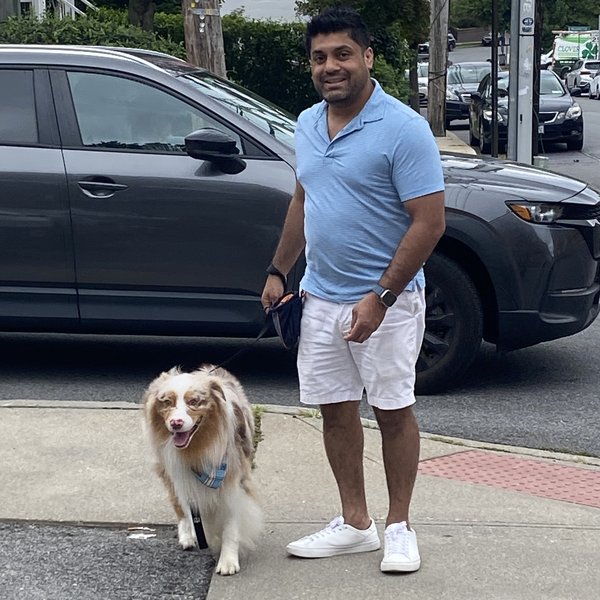
I’m Leny, and Kai is my Australian Shepherd, the reason there’s dog hair on every floor of my house. This site is the gear and food Kai actually uses, with what worked for us and what didn’t, so you can spend less and get it right the first time.