
Leny J and Kai. Kai is my red merle Australian Shepherd. Born July 2024, 48 lb. Kai-tested means it’s one of his own.

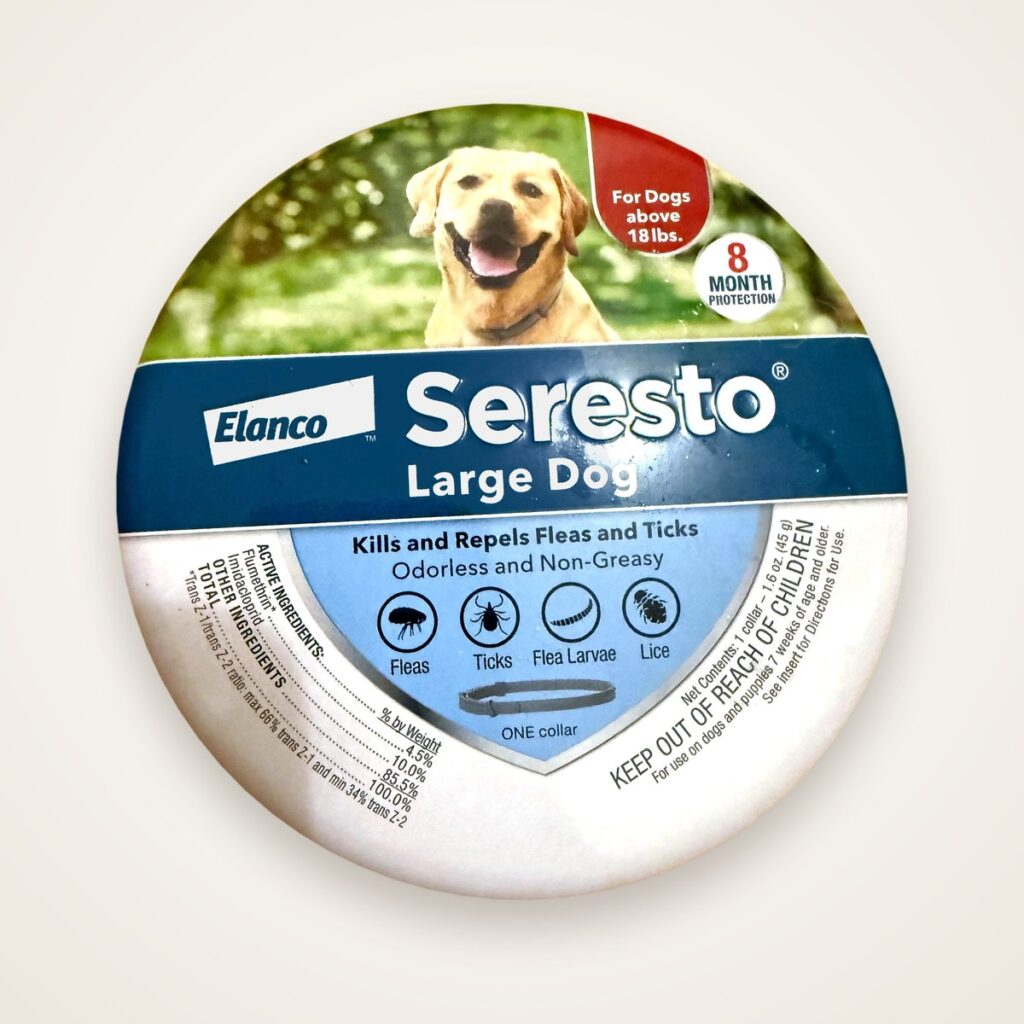
For fleas and ticks, Kai has two products: a Seresto collar for dogs over 18 lb and a Wondercide flea and tick spray in the Rosemary scent. Both are Kai-tested, which means they’re his own. I’m not going to promise you results. What I can give you is what each one is, what the label and the EPA say, and the questions worth asking your vet.
Kai is my red merle Aussie, born July 2024, 48 lb. Aussies come with one extra flea and tick question most breeds don’t, and that’s MDR1. I cover it below, and I’d read that part before you buy anything.
Everything else Kai uses is in the Owner’s Kit, and the health gear has its own health section.
What Kai uses for fleas and ticks
- Seresto collar for large dogs over 18 lb. A collar the EPA registers as a pesticide. The label says it prevents fleas and ticks for up to 8 months.
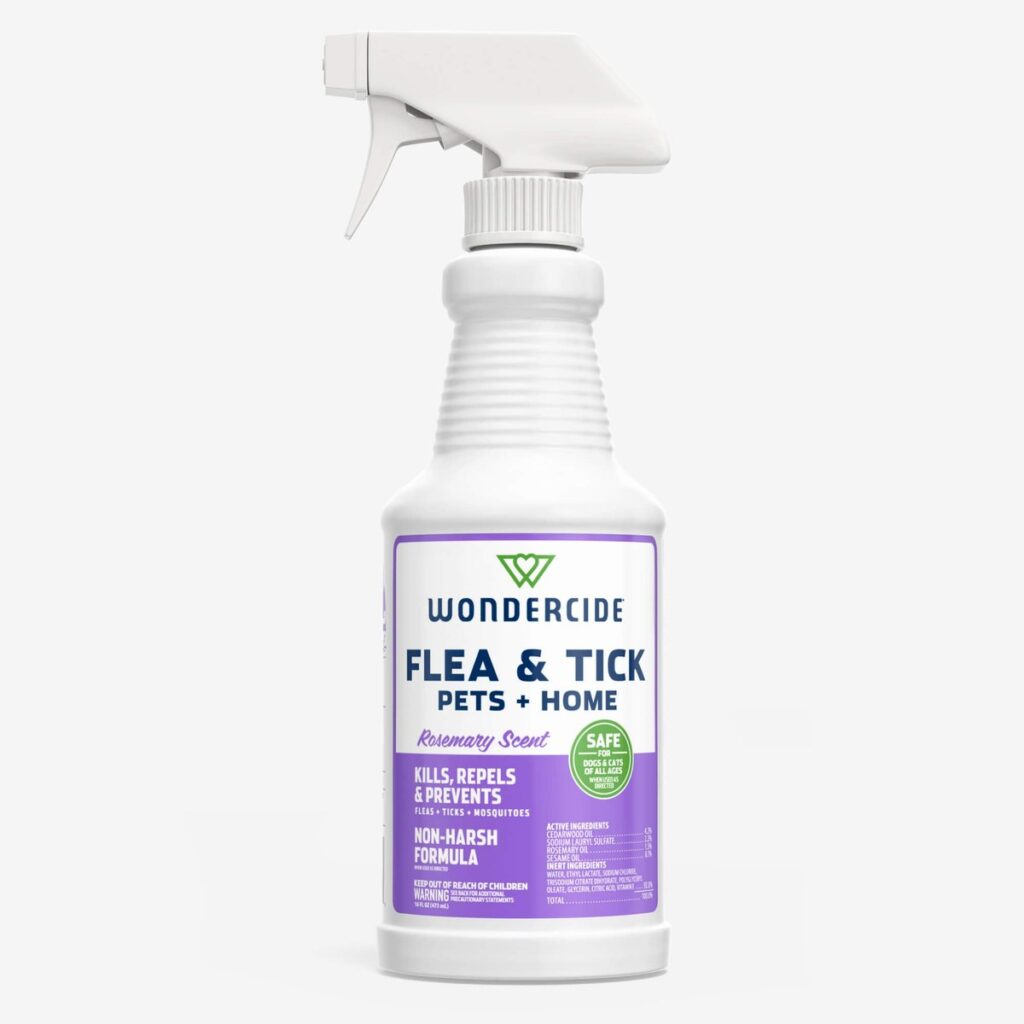
- Wondercide flea and tick spray, Rosemary, 16 oz. A plant oil spray for pets and the home. Wondercide says to reapply every 24 hours for continuous protection.
They’re very different products. One is a long-lasting collar with two synthetic actives, and the other is a spray you’d use often. Neither one replaces a conversation with your vet about what your dog needs where you live.
Seresto collar for dogs over 18 lb
Seresto is a flea and tick collar made by Elanco. The version Kai has is the large dog collar for dogs over 18 lb. Per the EPA label, it contains 10.0% imidacloprid and 4.5% flumethrin, and it’s for dogs and puppies 7 weeks and older.
What the label says, in plain terms:
- Up to 8 months. That’s the label’s stated duration for fleas and ticks. It’s the maker’s claim, not a result I’m reporting.
- Water resistant, with a catch. To keep the full 8 months, the label says not to bathe more than once a month. For dogs that swim once a month or more, it lists 5 months for fleas and 7 months for ticks.
- Fit matters. The label says not to attach a leash to the collar and to make sure it isn’t too tight.
- Skin reactions can happen. The label says slight hair loss and mild skin reactions may occur where the collar sits.
If your Aussie swims a lot or gets bathed often, that bathing line is worth reading twice. My dog shampoo guide covers what we use at bath time.
As an Amazon Associate, we earn from qualifying purchases. The price you pay doesn’t change.
Wondercide flea and tick spray
Wondercide makes a plant oil spray for pets and the home. Kai’s bottle is the Rosemary scent in the 16 oz size.
Wondercide’s 16 oz Pets and Home page lists the Rosemary scent’s active ingredients as cedarwood oil, sodium lauryl sulfate, rosemary oil and sesame oil. The other scents use different oils, so check the label on the bottle you get. The same page says that for continuous protection you reapply daily, every 24 hours. That’s a very different routine from a collar that lasts months.
One thing to understand about plant oil sprays: they aren’t regulated the same way as Seresto. The EPA exempts products it calls minimum risk pesticides from registration. Seresto has an EPA registration number on its label. If a spray’s label says it’s a minimum risk pesticide, that means it’s exempt from EPA registration, so read the bottle and decide with your vet.
The Seresto safety record, in plain terms
If you’ve searched Seresto, you’ve seen the headlines. Here’s what the official sources actually say, so you can weigh it yourself.
- The EPA review. The EPA began an in-depth review in 2021. In its review summary, it says it analyzed 1,400 deaths reported from 2016 to 2020, which were 2 percent of all Seresto incidents reported in those years. In many of those reports, critical details were missing, so the agency couldn’t determine the cause of death.
- What changed. The EPA required added measures: label warnings that describe common adverse effects and tell owners to remove the collar if they happen, annual incident and sales reporting from Elanco, and a look at the collar’s release mechanism to reduce strangulation risk. It also limited the registration to five years.
- The EPA’s conclusion. With those changes, the EPA concluded the collars still meet the federal standard for registration.
- The Inspector General. In February 2024, the EPA’s Inspector General published Report 24-E-0023. It says pet collars containing pesticides continue to be used without assurance that there are no unreasonable adverse effects on pets.
So the regulator kept it on the market with conditions, and its own watchdog said that wasn’t enough assurance. Both things are true. I’m not going to tell you which way to lean. I’d bring both links to your vet and ask what they’ve seen in their own practice.
If you do use the collar, the label instructions are the practical part: check the fit, don’t clip a leash to it, watch the skin under it, and take it off if you see a reaction.
Collar, chew or topical: what your vet will weigh
Flea and tick prevention comes in three main forms, and your vet will usually start by asking about your dog and where you live.
- Collars. Like Seresto. Long-lasting, worn all the time, and sold without a prescription.
- Oral chews. Products like Nexgard, Simparica and Bravecto. These need a prescription from your vet.
- Topicals. Liquids applied to the skin, like Revolution or Advantage Multi.
PetMD recommends year-round prevention and says to talk to your vet about which product fits your dog. The CDC also says to talk to your vet about tick preventives, and adds the part that changes by region: ask about the tickborne diseases common where you live. For an Aussie, the extra question is MDR1.
Questions worth taking to the appointment:
- Which ticks and tickborne diseases are common where we live?
- Does my dog’s MDR1 status matter for this product?
- Does my dog swim or get bathed often enough to shorten a collar’s protection?
- Is year-round prevention right for my dog, and what should I do if I see a reaction?
Australian Shepherds, MDR1 and flea and tick products
MDR1 is a gene mutation that changes how some dogs handle certain drugs. It shows up in herding breeds, and Aussies are one of them. A dog with the mutation can react badly to drugs that other dogs handle fine, which is why I keep telling you to know your dog’s status. My MDR1 test guide explains the cheek swab and what the results mean.
The good news is that a lot of common flea and tick drugs have been tested in MDR1 dogs.
- AAHA says makers of drugs containing afoxolaner, fluralaner, ivermectin, milbemycin, moxidectin, sarolaner and selamectin tested them in dogs with the MDR1 mutation, and those drugs are considered safe at FDA approved doses. AAHA’s advice is to test your dog and tell your vet the result.
- PetMD lists Nexgard, Nexgard Plus, Bravecto, Simparica, Simparica Trio, Advantage Multi and Revolution as tested in MDR1 dogs with no adverse effects.
Those lists name specific drugs and products. Seresto isn’t one of them, and neither is Wondercide. That doesn’t mean either is a problem for an MDR1 dog. It means it’s exactly the question to bring to your vet, along with your dog’s test result.
Checking a double coat for ticks
No product replaces a tick check, and an Aussie coat makes it harder. The CDC says to check pets for ticks daily, especially after time outdoors, and notes that ticks are hard to spot on dogs with long or dark fur. If you find one, remove it right away.

Here’s how I’d go through a thick coat:
- Go against the grain. Part the coat with your fingers so you can see skin, not just the top layer.
- Hit the hiding spots. Ears, around the eyes, under the collar, under the front legs, between the toes, around the tail and the groin.
- Feel as well as look. A small bump under the coat is easier to feel than to see, especially on a merle.
- Use a brush. A regular brush-out doubles as a coat check. My brush guide covers the undercoat rake that gets down to the skin.
If you find a tick, take it off and keep an eye on the spot. If your dog seems off in the days after, call your vet and mention the tick.
Side by side comparison
| Product | Type | Active ingredients | How long | Who it’s for |
|---|---|---|---|---|
| Seresto Large Dog | Collar | 10.0% imidacloprid, 4.5% flumethrin | Up to 8 months, per the label | Dogs over 18 lb, 7 weeks and older |
| Wondercide spray | Spray | Cedarwood oil, sodium lauryl sulfate, rosemary oil, sesame oil, per Wondercide’s page | Reapply every 24 hours | Pets and the home |
| See Kai’s health gear | ||||
Frequently asked questions
Is the Seresto collar safe for Australian Shepherds?
The EPA reviewed Seresto, added label warnings and other conditions, and kept it registered. The EPA Inspector General said in 2024 that there still isn’t assurance of no unreasonable adverse effects on pets. Seresto isn’t on the MDR1 tested lists from AAHA or PetMD, so ask your vet about your dog.
Can Australian Shepherds with the MDR1 mutation use flea and tick prevention?
Many can. AAHA says drugs containing afoxolaner, fluralaner, ivermectin, milbemycin, moxidectin, sarolaner and selamectin were tested in MDR1 dogs and are considered safe at FDA approved doses. Test your dog and tell your vet the result.
How do I check a thick Aussie coat for ticks?
Check daily, especially after time outdoors. Part the coat against the grain to see skin, feel for bumps, and check the ears, under the collar, under the legs, between the toes and around the tail. Remove any tick right away.
More from Kai’s health and grooming shelf: the MDR1 test, the undercoat rake and the dog shampoo. Everything else he uses is in the Owner’s Kit.