
Technique matters more than mileage. Kai did better with short, paid exposures than with long outings that cooked his brain.
Australian Shepherds are observant. Keep the puppy calm enough to think.
Core techniques
Look-at-that. Spot a trigger at a distance. Mark looking, then mark looking back at you. Pay. Increase difficulty slowly.
Open bar or closed bar. Scary thing appears, treats rain. Scary thing leaves, treats stop. Pairs the world with good news.
Consent petting. Approach, pause, pet briefly, stop. If he leans in, continue. If he peels away, honor it.
Parallel passes. Walk past people or dogs without forced greetings. Greetings are a bonus. They aren’t the default.
Handling reps. Ears, paws, collar, brief brush. Pay stillness. Grooming is social too.
Food and hardware
Carry soft bites from Kai’s go-to treats. We walk on the Freedom harness. It works well. It isn’t chew-proof, but it comes with a chew warranty for a small replacement fee. When you need space to practice come and settle outdoors, the Viper long line helps without off-leash gambling.
Session design
One or two goals per outing. End early while he can still eat and think. Over-tired socialization is just noise exposure.
Watch his body
None of this works if you ignore body language. A few good reps beat a crowd. More on Training, and the gear we started with is in the Owner’s Kit.
Common mistake
Letting every stranger bear-hug the puppy “for socialization.” That can create a jump-and-mouth greeter or a dog who hates hands. Calm observation pays too.
Treat socialization like training reps: set up for success, mark the good choice, quit while ahead. Crowds come much later.
If he cannot look away from a trigger, you are too close. Many polite adult dogs were taught that not every hello is required.
Potty first. Then work. Then break. Kids need consent-petting rules as much as adults do. See Training.
Building difficulty
Week one might be a quiet driveway and one calm visitor. Later: busier sidewalks, novel surfaces, known dogs at a parallel distance. Don’t skip steps to look “well socialized” on a checklist.
Carry soft bites from Kai’s go-to treats every outing. If he can’t eat, change the setup. The Freedom harness keeps him secure, and the Viper long line gives him room later. Everything else is in the Owner’s Kit.
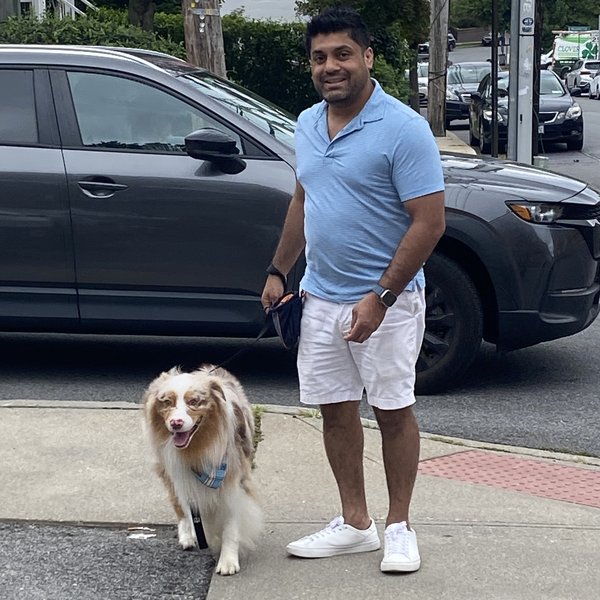
I’m Leny, and Kai is my Australian Shepherd, the reason there’s dog hair on every floor of my house. This site is the gear and food Kai actually uses, with what worked for us and what didn’t, so you can spend less and get it right the first time.